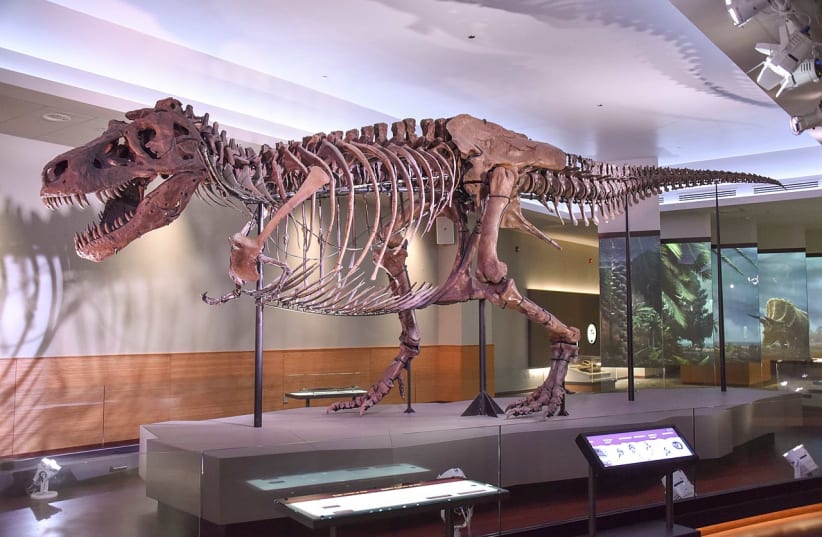
The fossil of Sue the T-Rex is on display at the Field Museum in Chicago.
Sue, the biggest and best preserved Tyrannosaurus Rex ever unearthed, no doubt was a fearsome beast when this predator prowled what is now South Dakota about 67 million years ago at the twilight of the age of dinosaurs.

But even this huge dinosaur, whose fossils are displayed at the Field Museum in Chicago, was not invulnerable. A prime example of this is the series of circular holes in Sue’s jawbone that continue to baffle scientists. New research seeking an explanation for these holes has managed to rule out one major hypothesis, though the answer remains elusive.
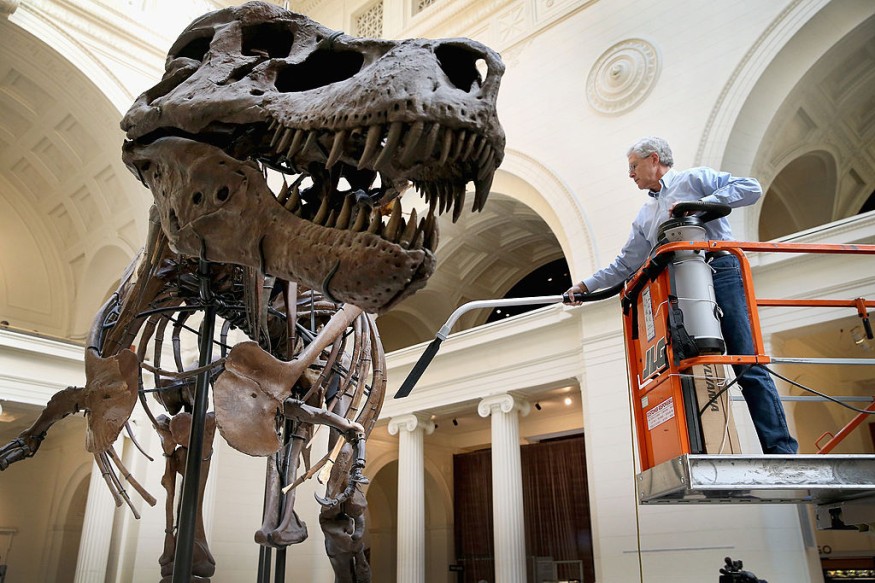
Researchers said a close examination of the eight holes – some the diameter of a golf ball – on the back half of Sue’s left lower jawbone, or mandible, determined that they were not caused by a type of microbial infection as some experts had proposed.

The holes were found to differ from bone damage caused by such an infection, said Bruce Rothschild, a medical doctor and research associate at the Carnegie Museum of Natural History in Pittsburgh, lead author of the study published this week in the journal Cretaceous Research.
Sue, measuring 40-1/2 feet long (12.3 meters), represents one of the world’s best-known dinosaur fossils. Tyrannosaurus was one of the largest land predators ever, inhabiting western North America at the end of the Cretaceous Period.
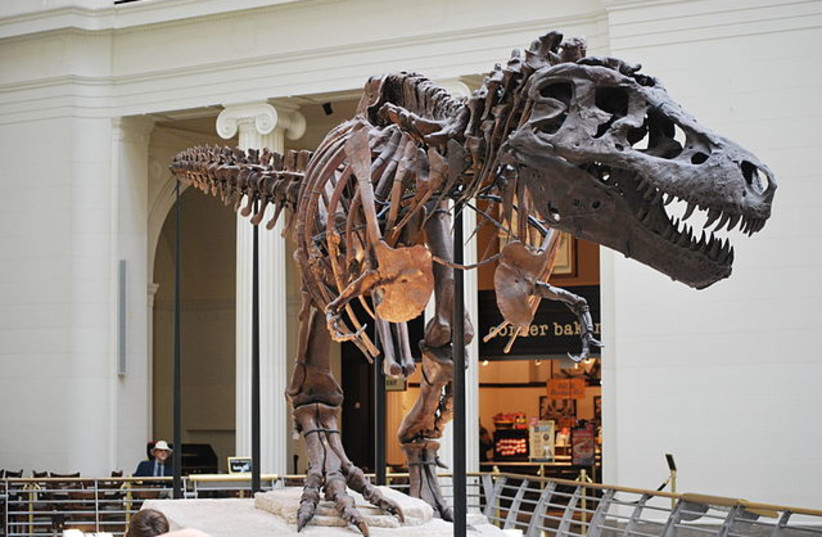
Holes can be seen in the skull of Sue the T-Rex, the best preserved fossil of the species found to date. (credit: Wikimedia Commons)
Field Museum paleontologist and study co-author Jingmai O’Connor noted that about 15% of all known T. rex specimens have holes similar to Sue’s.