DRUMHELLER — Think Flipper the dolphin, but really, really big and with a nasty set of teeth.
Think Flipper the dolphin, but really, really big and with a nasty set of teeth.
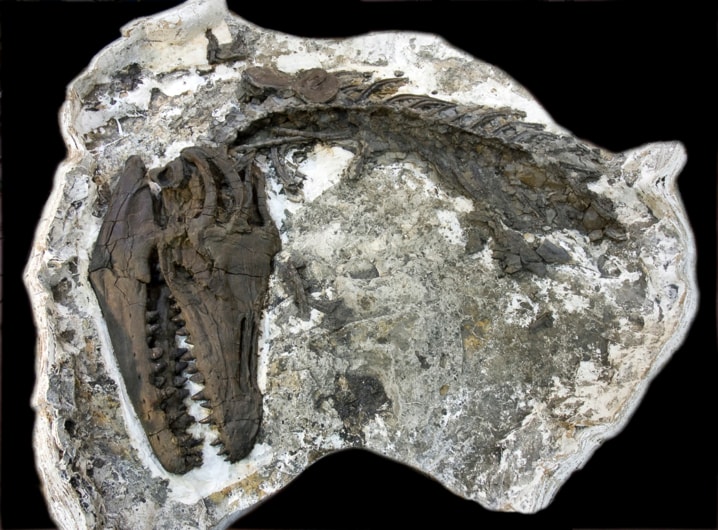
That’s sort of what the prehistoric marine reptile which used to swim across Alberta’s ancient seas looked like, according to a 75-million-year-old fossil recently discovered in southern Alberta.
Paleontolgists at Alberta’s Royal Tyrrell Museum found the mosasaur fossil at the Korite Mine near Lethbridge.
A team led by Dr. Donald Henderson is working to remove it.

Originally it was thought that only the tail was present, but further investigation has revealed a full specimen, six to seven metres long.
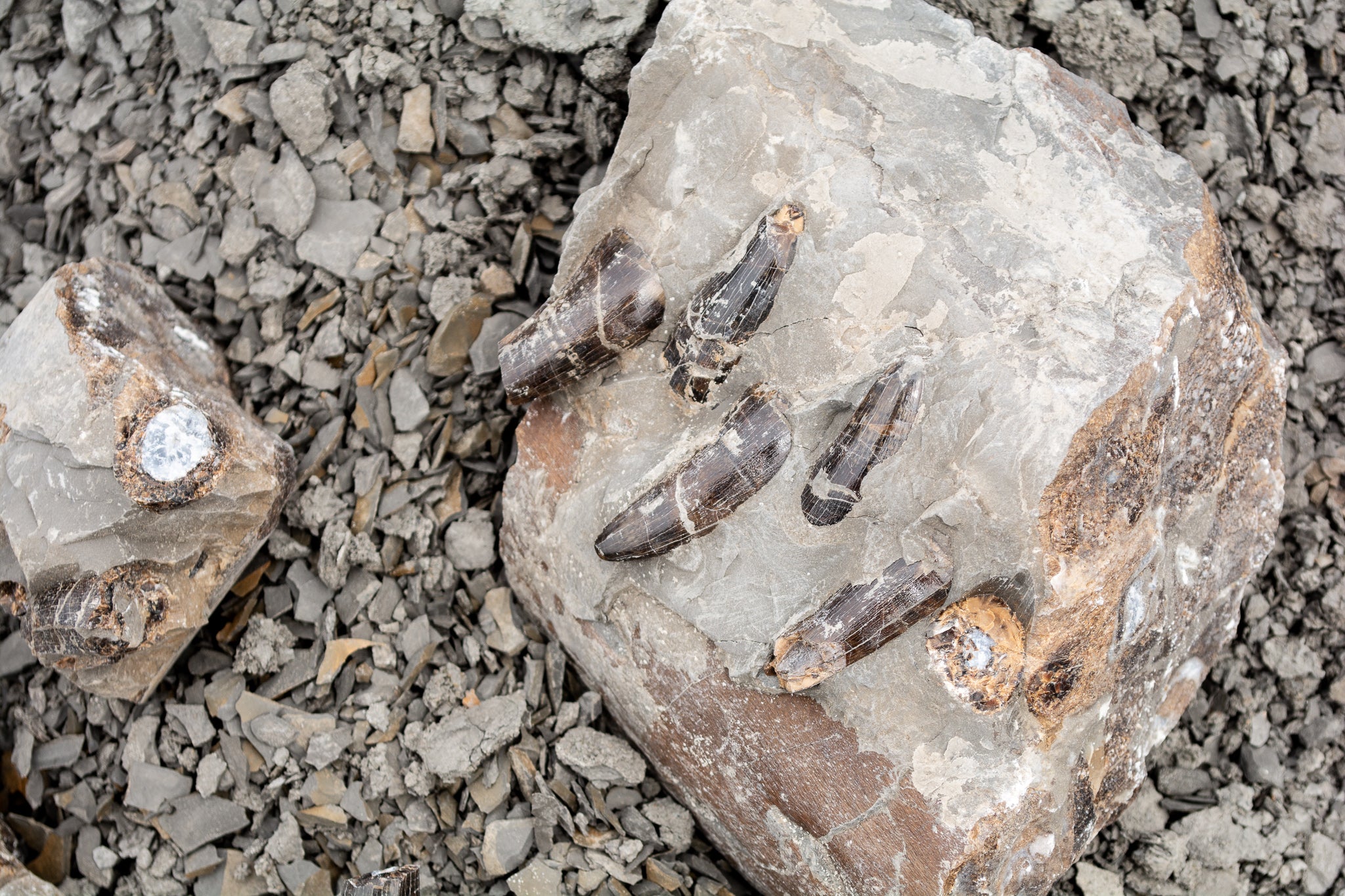
The well-preserved skull has an impressive set of teeth.
The discovery is significant as it is one of the most completely preserved mosasaur fossils discovered in Alberta.
The museum says the Korite Mine produces ammolite, a rare and valuable opal-like organic gemstone popular in jewelry.
Ammolite is formed from fossilized, shell-bearing sea creatures called ammonites, which lived among the mosasaurs and other marine reptiles in the Bearpaw Sea that covered Alberta all those millions of years ago.
In May of this year, the museum’s new exhibit, Alberta’s Last Sea Dragon — Solving an Ancient Puzzle will feature a new species of elasmosaur also found at the Korite Mine, in 2007.

“It’s been almost five years since we’ve found a marine reptile at the Korite Mine,” says museum spokesman Andrew Neuman. “The Korite Mine and the museum maintain a very positive relationship, which has led to the recovery of a number of significant fossils.”
It is expected that it will take five days to remove the fossil and ready it for transport to the Royal Tyrrell Museum for further study and research.