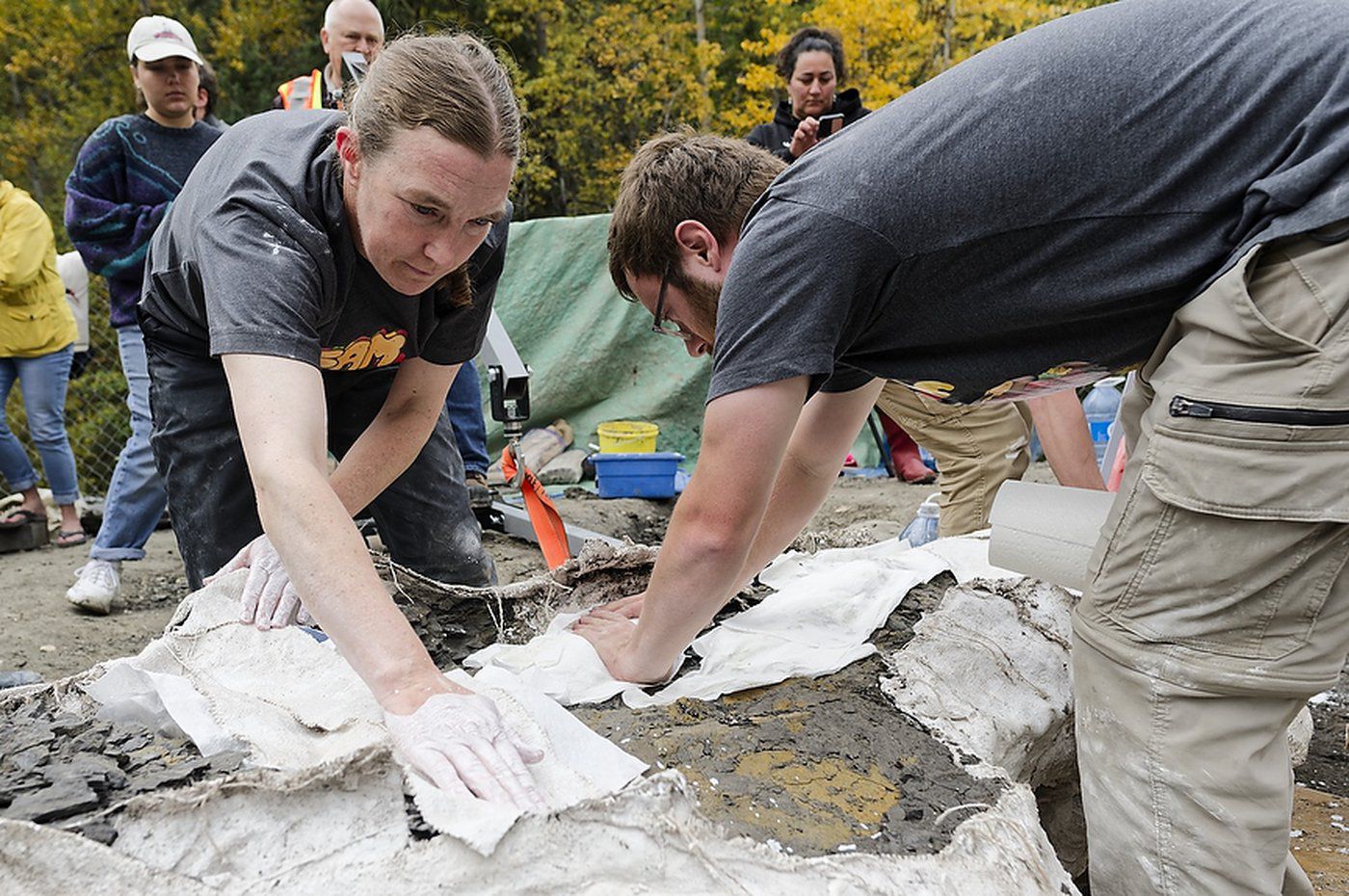
Emily Bamforth begins applying plaster to the pachyrhinosaurus lakusta skull to prepare it for its move from the Pipestone Creek bone bed about 40 km west of Grande Prairie, Alta. to the museum on Wednesday, Sept. 25, 2024. This was the first skull to be extracted from the bone bed in about 16 years and could possible unlock some mysteries of the local dinosaurs past.
Local palaeontologists may have unearthed the largest dinosaur skull to come from the Pipestone Creek bonebed last Wednesday.
The 72-million-year-old, 1.6 metre-long, 272-kilogram skull of a pachyrhinosaurus lakustai, a dinosaur unique to the Grande Prairie region, is the first skull to be retrieved from the bonebed in about 16 years.
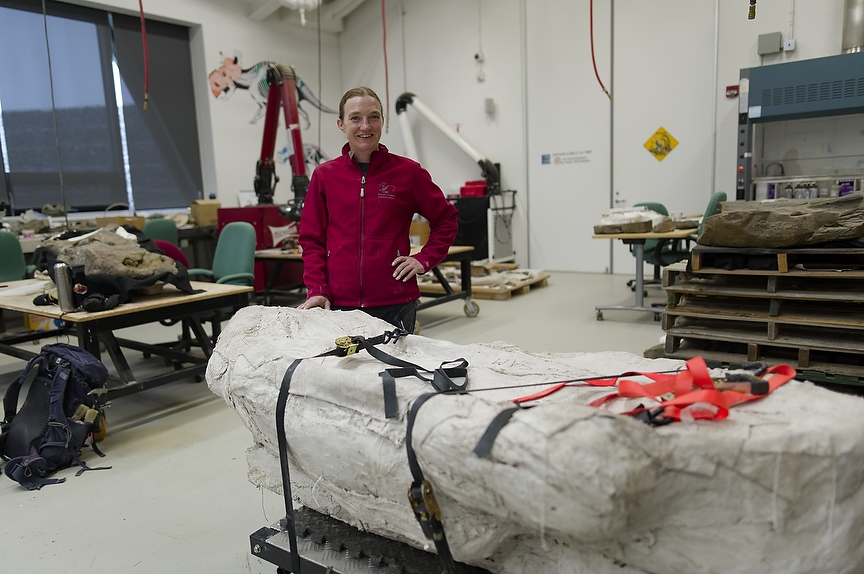
“This is definitely the biggest fossil I’ve ever had an opportunity to work on,” said Emily Bamforth, Philip J. Currie Dinosaur Museum (PJCDM) curator.
“Every fossil we find is unique.
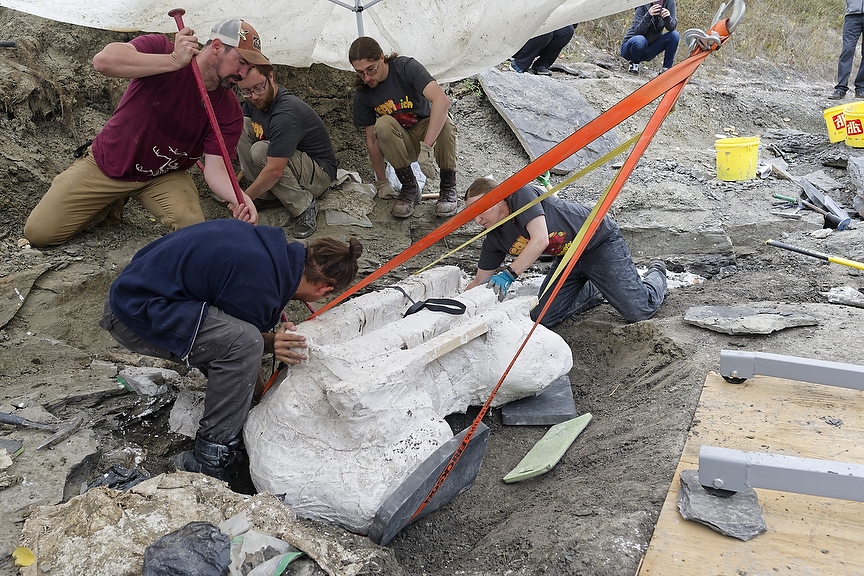
“Every fossil from the bonebed or from anywhere, really, can tell you something unique about that animal that lived in that time period.
“It is particularly true of skulls; a dinosaur skull has an incredible amount of information.”
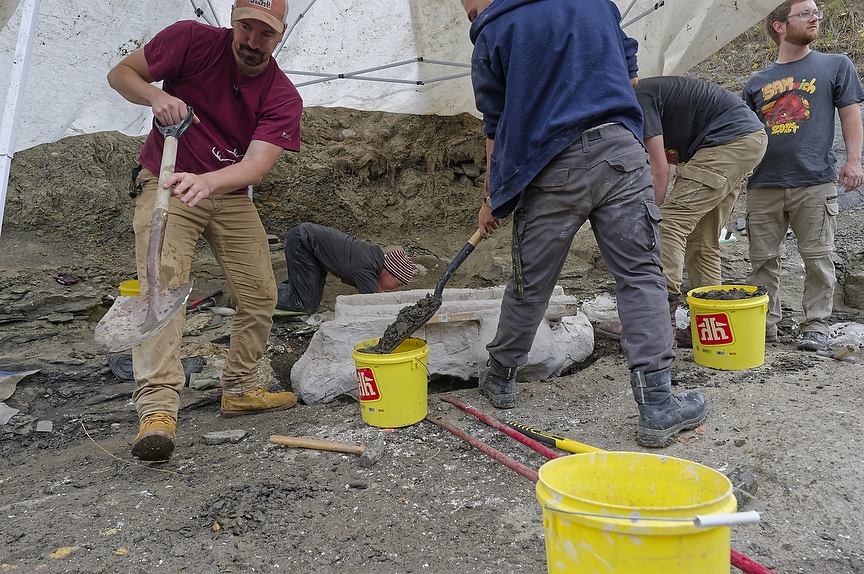
She said there is a possibility of recreating the dinosaur’s brain with information from the skull, which can give more insights into the dinosaur’s cognition, sense of smell, hearing and social interactions.
She also noted it would give palaeontologists a better understanding of certain species and their differences since there are very few samples to compare.