Millions of years ago, a river flowed through what is now North Florida. Along its banks, something extraordinary happened: multiple elephant relatives died and were buried in the same place, creating what scientists now describe as an astonishing fossil site.
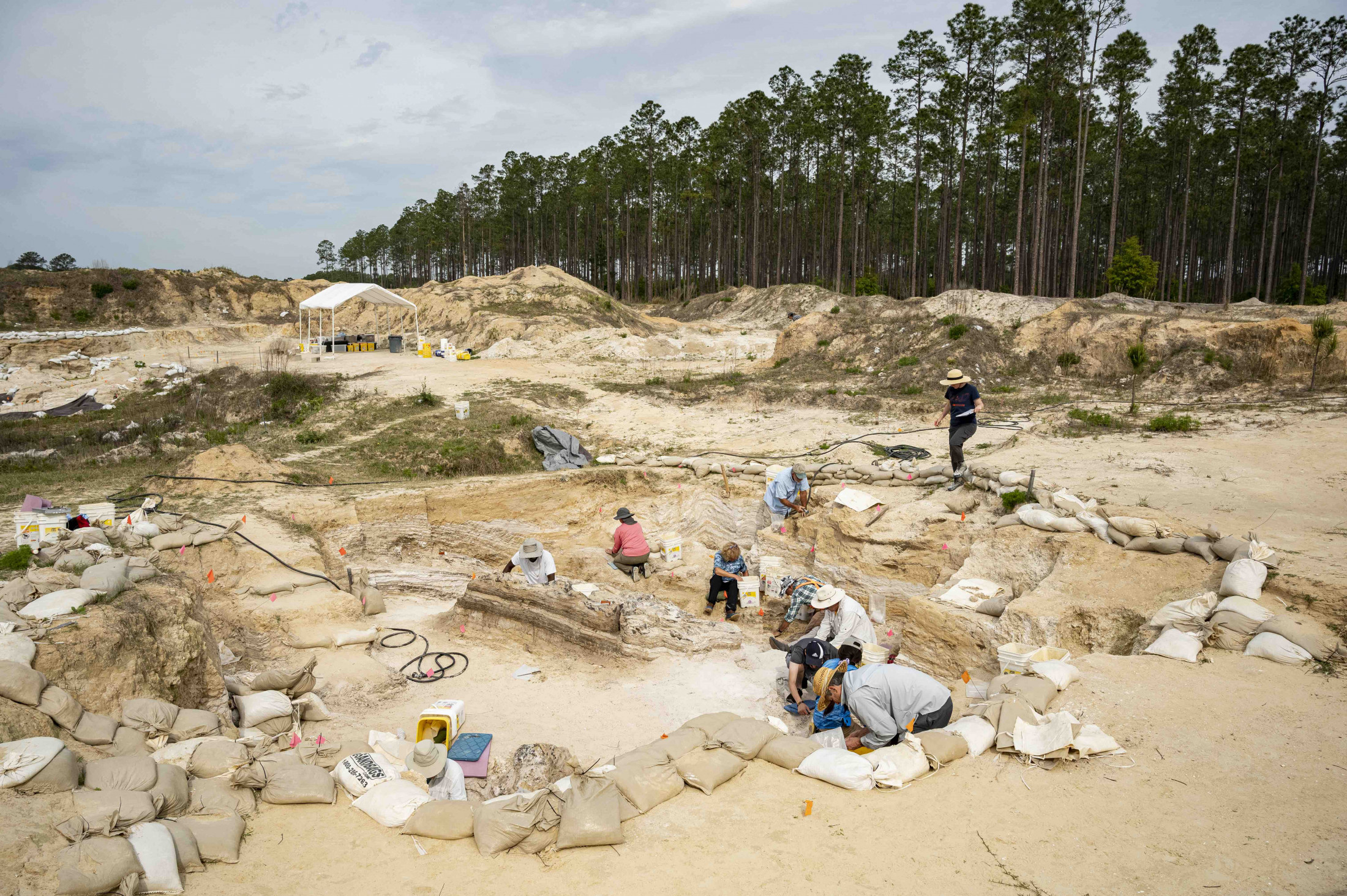
The animals were gomphotheres — extinct relatives of modern elephants — and they lived in Florida around 5.5 million years ago.
Although the animals may have died hundreds of years apart, their remains were eventually carried or deposited into the same ancient river environment. Their bones became buried alongside the remains of other prehistoric creatures, preserving a remarkable snapshot of life in ancient Florida.
The discovery emerged at the Montbrook Fossil Dig, where paleontologists and volunteers began uncovering what would become an exceptionally important find.

At first, researchers discovered only portions of a gomphothere skeleton. Isolated bones had been found at Montbrook before, so there was little reason to suspect that anything extraordinary was waiting beneath the surface.
Then a volunteer uncovered something much larger.
Retired chemistry teacher Dean Warner began finding one toe and ankle bone after another. As he continued digging, the bones of the animal’s forelimb began appearing — including the ulna and radius.
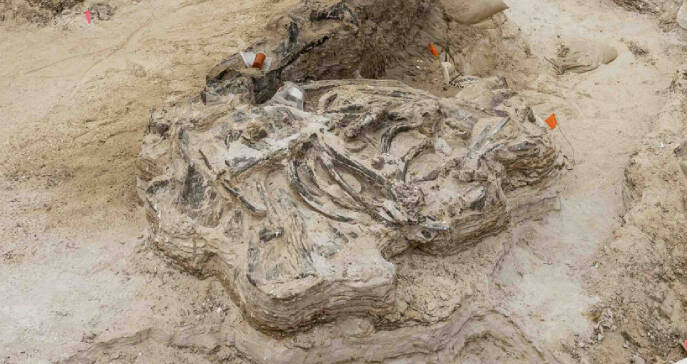
Suddenly, the excavation took on a completely different meaning.
Researchers eventually determined that they had uncovered the most complete gomphothere skeleton from this period ever found in Florida, and one of the best-known specimens in North America.
But the remarkable skeleton was only part of the mystery.
The ancient river had preserved an entire community of animals — and scientists are still piecing together the story of why so many creatures ended up in the same place.